30 Aug Hull Minster notes
Hull Minster Lunchtime Concert programme notes:
Pierre Boulez – Sonata no 2 :
Learning to play the Second Sonata for Piano by Pierre Boulez
This is undoubtedly the hardest thing I have ever tried to learn to play. There have been many times when I could not see myself ever being able to know it well enough. I once learned the First Sonata to play it at the Ferens Gallery ( around 2001 )and then began to learn the first three movements of the Second but without a clear idea of a performance and,indeed,whether it was even possible for me to play it.
I had played some very difficult scores in the past which, on the surface, should be in a similar vein ( such as Xenakis or Stockhausen ) but gradually, it becomes apparent that Boulez’ way of composing is not as abstract in his use of sounds, but, indeed, connected melodically. The notes can be spread right across the keyboard but phrasing, and a more conventional nuance becomes more and more important. The score itself is the only one I have ever studied when I sometimes have to make doubly sure I have it the right way round on the stand! This is so unusual.
Despite its ultimate melodic nature,the sonata is full of very difficult rhythms;it took a long time to realise that often the effect of these is just that notes are not played together but in between each other. One spends hours trying to make these work according to correct timing but sometimes I can see no way except to approximate these,especially in performance..
I was practising the piece intensely for seven months and,despite some of it feeling as if it lay under the hands more,knew there was something else which would hold me back…..Boulez demands very rapid speeds all through the first movement and in many sections of the subsequent three.It is almost like you should prepare yourself at all sorts of slow tempos and then just go for it at speed when playing in front of people.This has been my experience with this particular piece.I do not have the energy to play this at speed except for performance. Despite nearly eight months of work I did not play the piece at the right tempi until John and I met in order to experience how to turn the pages during performance. Afterwards,I realised that I had almost learned the piece enough.I have recently noted a comment made by the Serbian pianist Stefanovich,who has recorded this sonata to great acclaim – she said that even after six months she was about to tell people it was just too hard to learn it and then,by eight months she was surfing,and that the piece is well written. I am not surfing the piece myself but I experienced a similar awakening that the score does not just consist of incredibly,unplayable notes and timings,but that it does begin to feel like you are playing anything else for the instrument, and not somehow trying to adopt the visual score to nearly impossible hand and finger movements as if trying to learn to play a completely different instrument. I would recommend anyone to try learning this piece if they have already played this kind of repertoire,but to give yourself many months and more before it begins to become a piece.
S.H. Peterborough 1.7.2025
Toru Takemitsu – Piano Distance for piano solo.
Toru Takemitsu’s ‘Piano Distance’ is an early piece which I particularly wanted to play having previously performed his later ‘Raintree Sketch II’.
The piece has, an improvisatory quality even though strictly notated, and I hope I can convey this in my playing.
A key feature is the exploration of the relationship between silence and sound, and this should be effective in the large resonant space of Hull Minster. Also the essential idea of physical distance, which Takemitsu requires to be made clear in performance (sounds near and far), and again how that can be made effective in a large space.
I realised during my first rehearsal at the Minster, the importance of dynamic variety and the necessary detailed use of the soft pedal, which is challenging technically and intriguing.
N.B. 2025
John Cage – In a Landscape for piano solo ( 1948 )
This minimalist piece for solo piano or harp was written to accompany a dance by Merce Cunningham. At the time of writing Cage was particularly interested in the piano music of Erik Satie as evidenced by the relative lack of dynamics, consistent tempo and
slow progressions. However there are more typically experimental aspects to the work. Cage instructs the performer to sustain both the damper and sustain pedals for the entire duration of the work. This creates mesmerising harmonics which build and resonate throughout, resulting in an ethereal and still atmosphere.
As Cage remarks the purpose of the music is ‘to sober and quiet the mind, thus rendering it susceptible to divine influences’. It is appropriate therefore that we are performing the work today in a beautiful church.
N.B. 2023
John Cage – Dream for piano solo ( 1948)
This work was originally used as music for the eponymous choreographed piece by Merce Cunningham, following the rhythmic structure of the dance and using a fixed gamut of tones. As with the Takemitsu’s ‘ Piano Distance’, and In a Landscape, resonance at the heart of the piece – Throughout, resonances are sustained, either manually or with the use of pedal. The music is essentially a single melodic line, except for the last few bars. This work is available in the C.F. Peters compilation “Piano Works 1935–48”
J.S. 2025
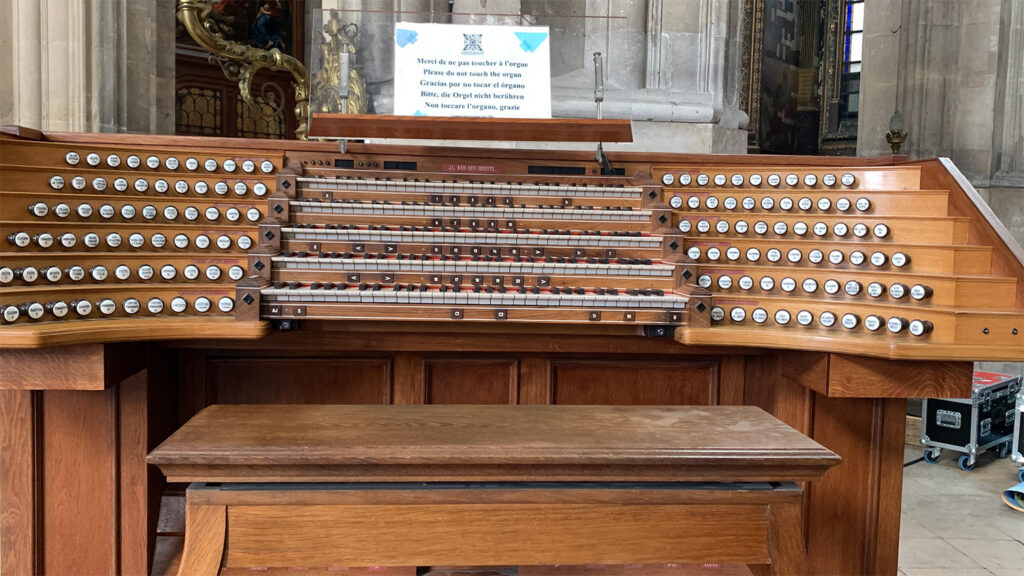
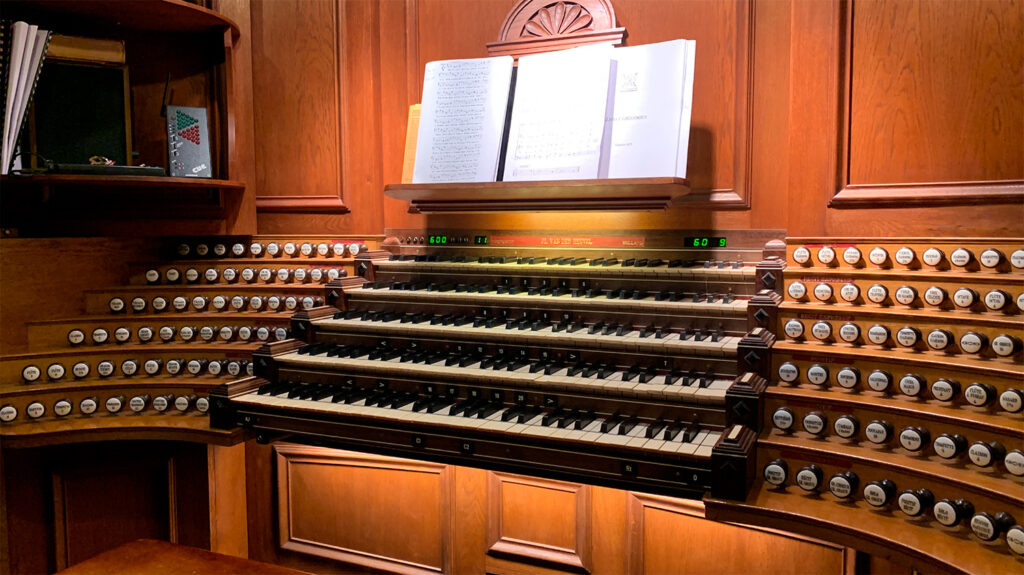
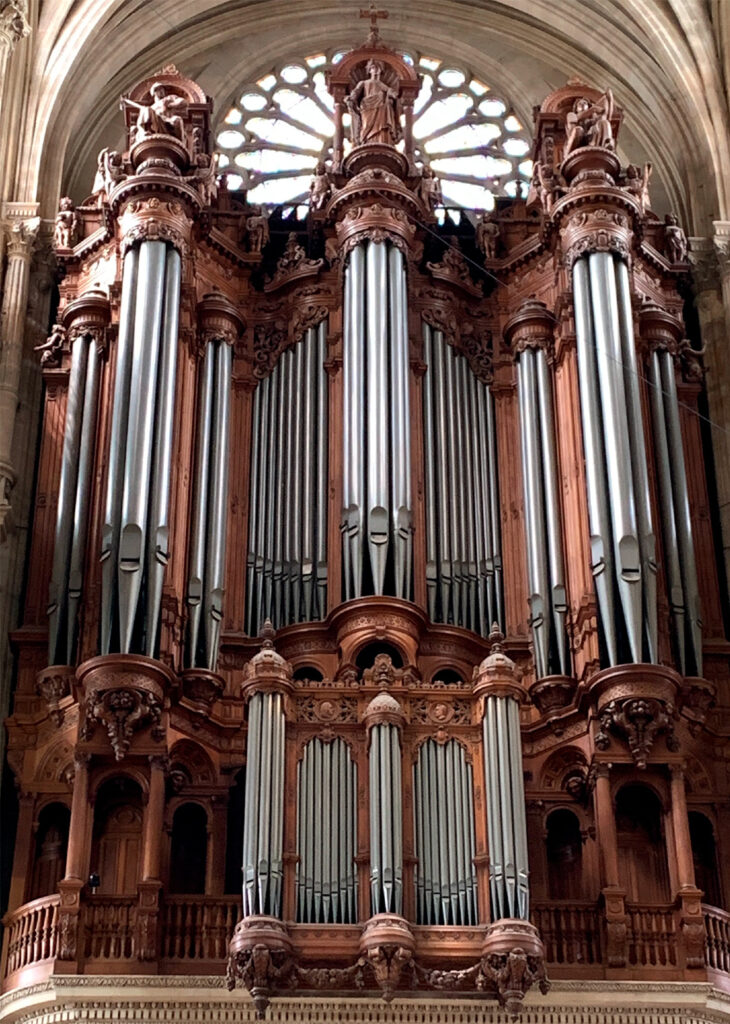
St. Eustache Organ, Paris.
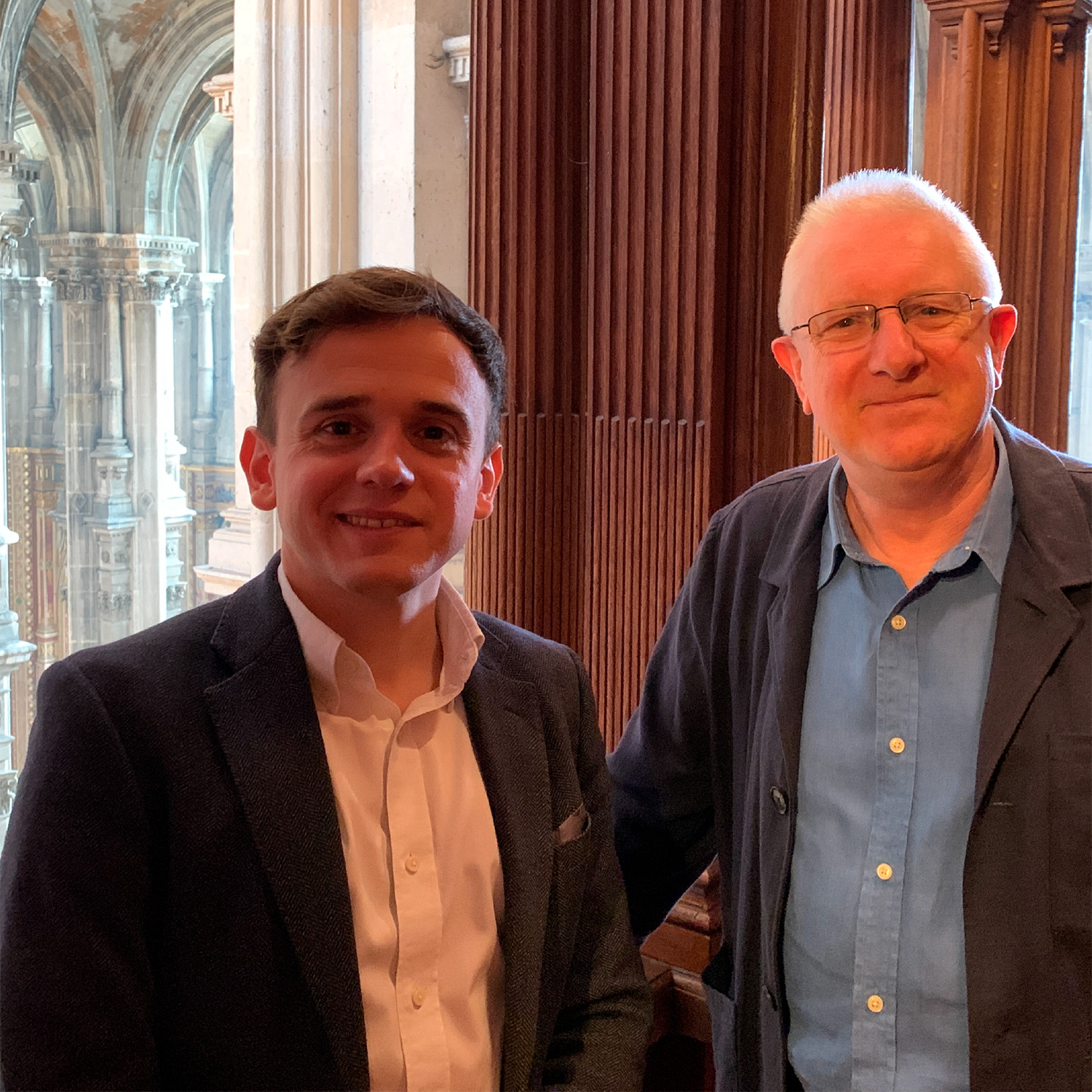
My association with St. Eustache goes back over 50 years when I was introduced to the then titulaire organist, teacher and composer Jean Guillou by the French architect Manu de Maurepas. Many years later in 2015, we met at his last performance of his Alice au pays de l’orgue. This year I had the honour and privilege of being invited up to the tribune at St. Eustache by the present titulaire organist Thomas Ospital.
The Grand organ is about to undergo a very big upgrade and refurbishment, when the orgue de choeur is to be rebuilt and performable from a new Grand organ console.
The 8000 pipe organ at St. Eustache now has an association dedicated to obtaining funds for this refurbishment, headed by Philippe de Carne and supported by Paris City Council. The organ is one of three major organs in Paris – the others being the Cavaille-Coll organ at St. Sulpice and the extended Cavaile-Coll organ at Notre Dame. The St. Eustache organ was completely rebuilt in 1989 ,under the direction of the then titulaire organist Jean Guillou, and whilst retaining some of the original pipework has many different sound colours, being built by the Dutch firm van Den Heuval.
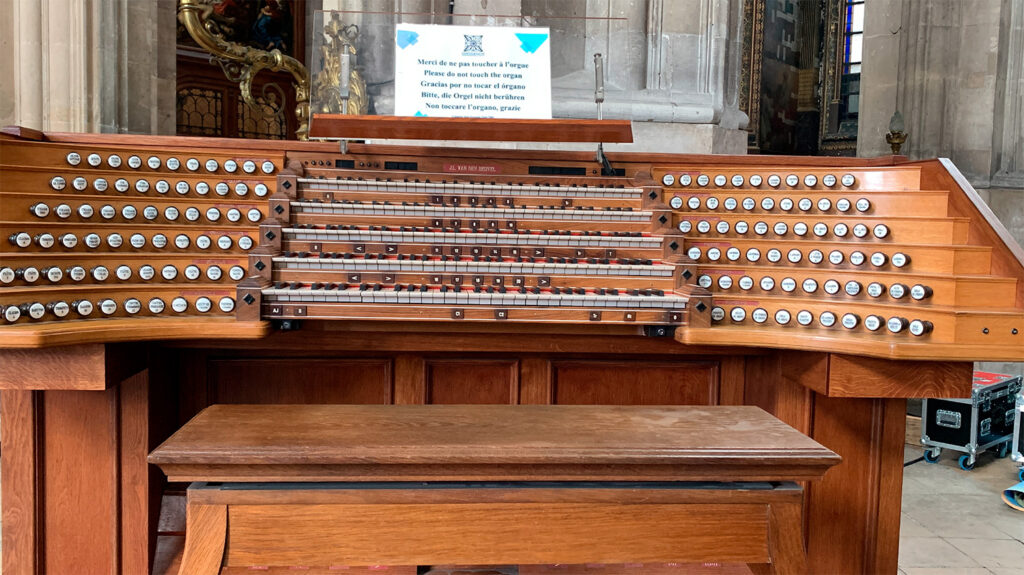
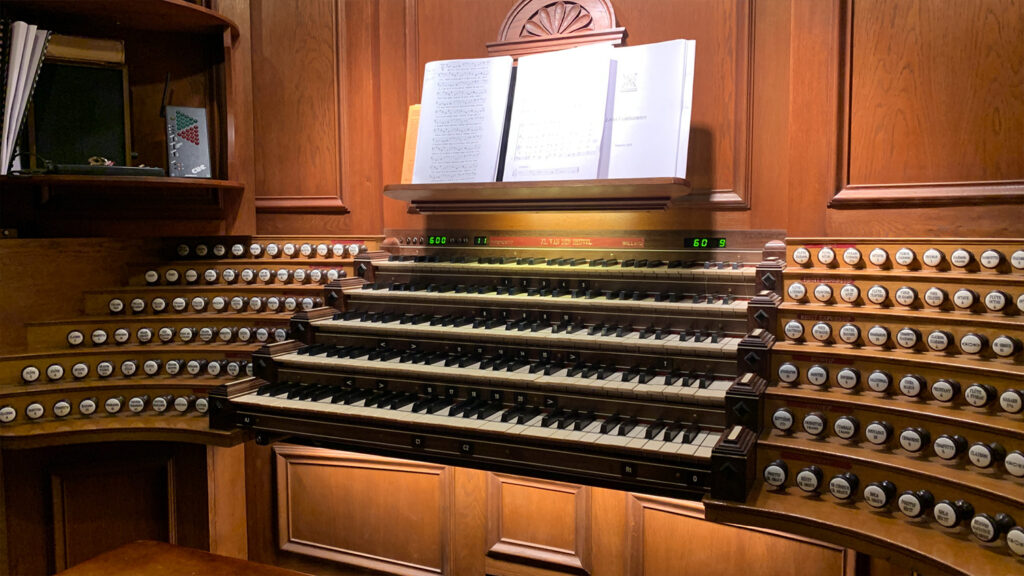
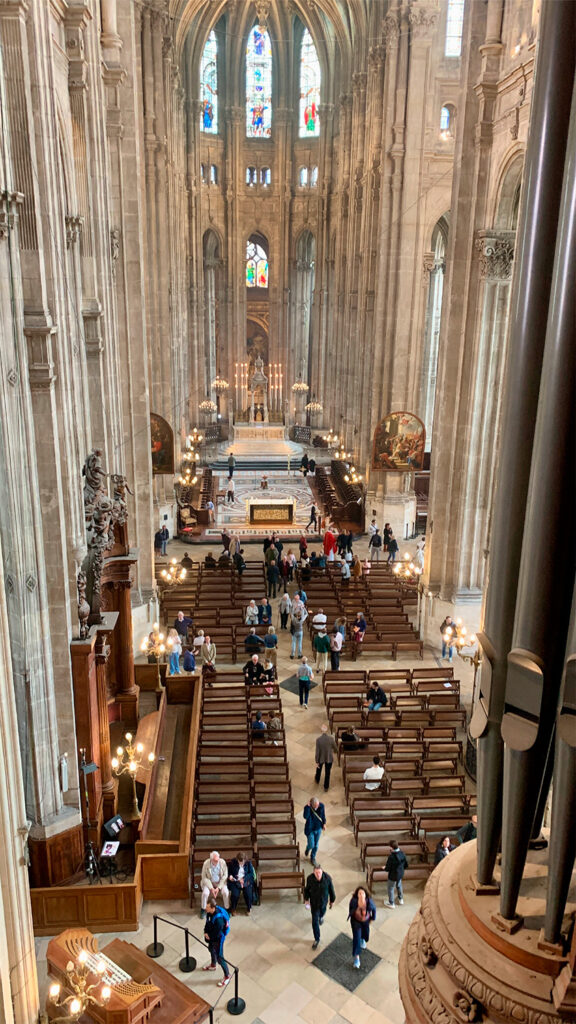
The photographs show a view the nave from the tribune, the present console at the tribune, the nave console and Thomas Ospital and myself.
If you wish to find out more about the organ click on the link here:
https://www.orguesainteustache.org/en
J.S. 2025.